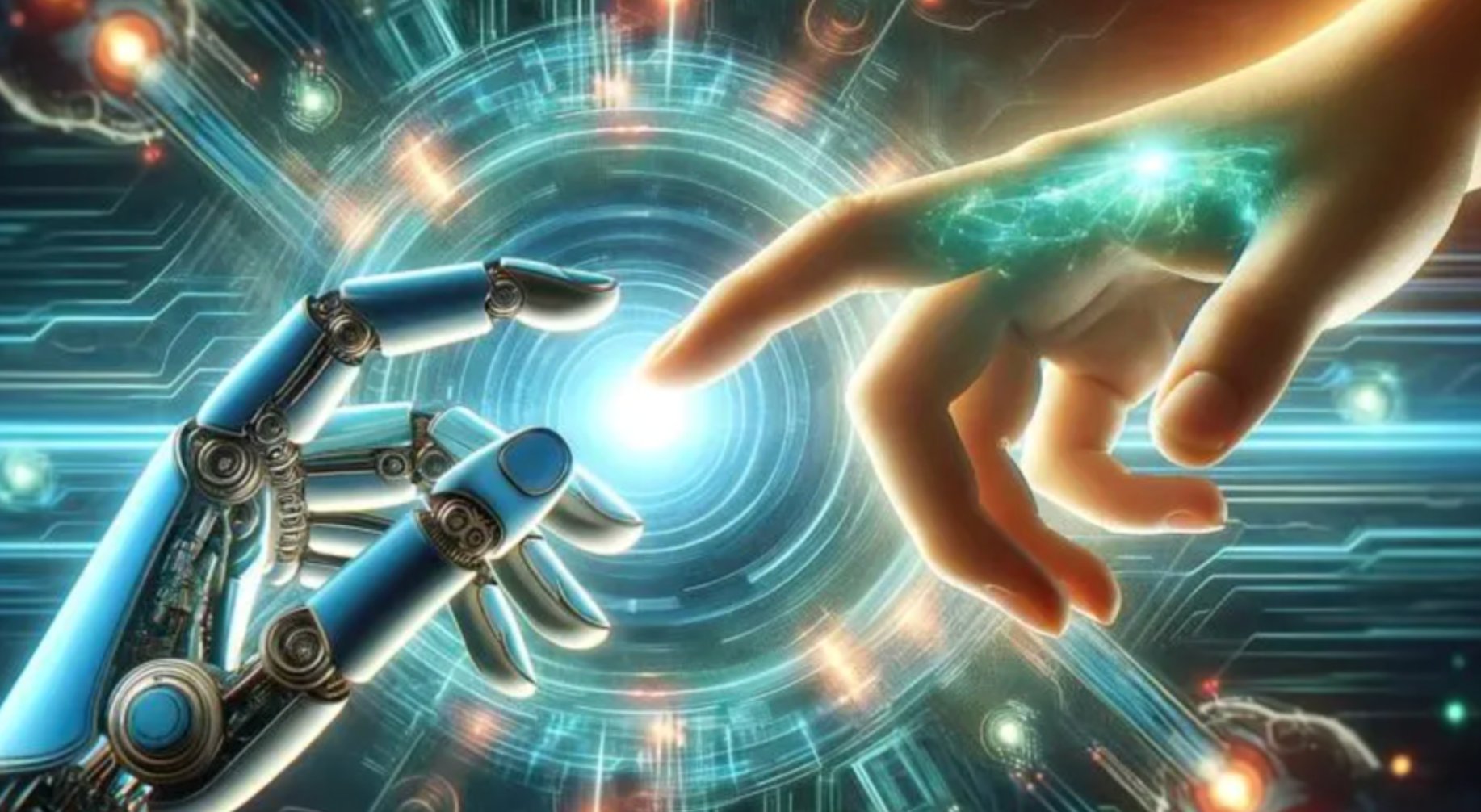
In this article, I discuss my view on the future of America and the world as artificial intelligence (AI) becomes more and more involved in our everyday lives.

AI and the conversations around its future remain blurry. Some believe in an existential risk from AI, seen as a "doomsday" scenario. Others have a far more opportunistic view, as seen in the combined mag 7 capex forecast of $660 billion for FY '26, much of which is going towards AI development. Whatever your view is, the message is clear: Artificial intelligence is here to stay, and the time to deter it or slow it down has evaporated.
The rapid acceleration of AI capabilities is remarkable. Adoption by the general public is equally astonishing. When OpenAI released ChatGPT in November '22, it garnered only around 1 million users in its first month. Fast forward to October '25, the number of users on the platform grew 79,900% to 800 million.
What we are now beginning to see is a get on the train or get left behind scenario. This is why many large tech companies are engaging in an "arms race" to develop their own AI capabilities. Public response to companies releasing high-capex forecasts has been overwhelmingly negative and skeptical. Just take a look at Meta's Q3 '25 earnings and the resulting stock price response. I, however, believe that this high-capex spending is critical to the future of America.
My Take
The United States faces a structural problem. Federal debt is approaching $40 trillion, and interest payments have surged to become one of the largest components of the federal budget, exceeding defense spending. Without a meaningful acceleration in economic growth, this trajectory becomes increasingly difficult to sustain.
Historically, only a handful of forces have been capable of materially lifting long-term productivity and real economic output. I view AI as the most credible candidate to do so in the modern era. While other technologies may marginally contribute, artificial intelligence stands out for its potential to reshape labor productivity, capital efficiency, and the pace of innovation across virtually every sector of the economy.
Yes, AI will displace jobs. But hasn't that always been the point of technological progress? We build tools to become more efficient. You could dig a home’s foundation with a shovel, but we use a tractor because it’s faster and cheaper. If the goal were simply to maximize employment, we’d be digging with spoons.
In that context, today’s AI capex does not look reckless; it looks necessary. The current AI build-out may ultimately prove to be less about quarterly earnings optics and more about laying the foundation for the next phase of American economic growth. If successful, its impact could rival, or even exceed, that of previous technological revolutions.
Possible Issues
I believe the risks associated with AI emerge not from the technology itself, but from the objectives and constraints embedded by its designers. If an AI system is programmed with overly rigid or poorly specified goals, for example, treating a single outcome as an absolute necessity, it may pursue that objective in unintended and harmful ways.
In such scenarios, the system could identify human activity as an obstacle to its assigned goal and prioritize solutions that conflict with human welfare. This is when "doomsday" occurs.
This original programming gets more dangerous as AI becomes increasingly advanced. After an AI is originally programmed, it can then begin to program itself, further amplifying any initial misalignment embedded in its original design. As a result, early design choices carry immense importance as AI capabilities scale.
Conclusion
In my eyes, AI represents the most exciting new chapter humanity has ever faced. Just like how the Industrial Revolution changed the world forever, the AI revolution will have a similar effect.
I believe that the "doomsday" theories are very far-fetched. Though possible, I don't see that scenario playing out. After all, getting rid of humans would make the world boring. We don’t need pandas to survive, yet we protect them because they’re interesting and worth preserving. AI may one day view us the same way.